
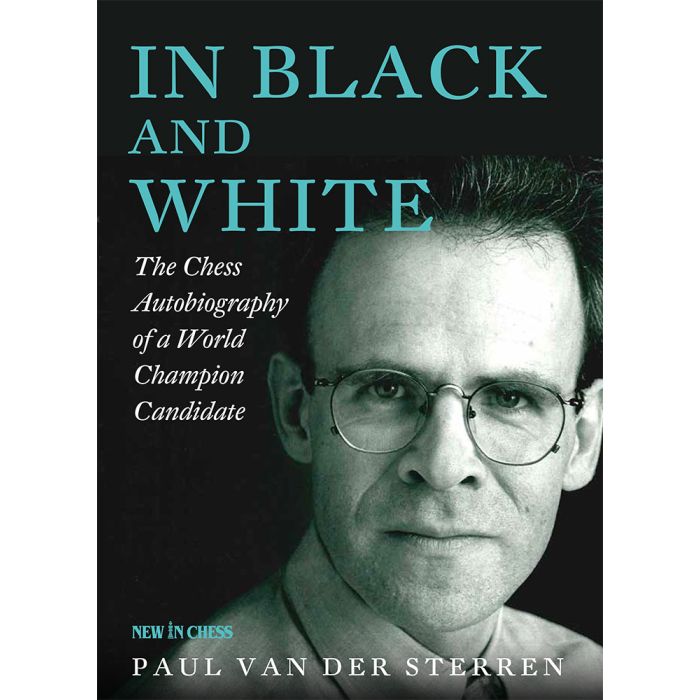
In Black and White - Hårdpärm
495 SEK
The Chess Autobiography of a World Champion Candidate
2024, 480 sidor
- Betala säkert med kort
- Maila oss, vi svarar snabbt!
- 30 dagars öppet köp
Saknar du en artikelgrupp? Kontakta oss och berätta!
- Varumärke9789083336503
Beskrivning
Art.nr: 9789083336503
In Black and White is probably the most honest autobiography ever published by a chess grandmaster. It covers Paul van der Sterren’s rise to the chess elite, but above all, his struggle to become a better player, his insecurities and the difficulties he encountered.
This book provides a hugely illuminating insight into the life of a chess professional, but there is a lot in his story that will resonate with players of any level. From his first moves on the chess board to his Candidates Match against Gata Kamsky, only four steps away from the World title – everything is described in great detail and with the utmost frankness by the Dutch grandmaster. The story doesn’t end there – the book’s final part describes the slow decline of an ageing pro and his eventual shift to meditation and mindfulness.
The Dutch edition of In Black and White, which contains more than 300 deeply analysed games and fragments, was published in 2011 and has achieved cult status. With this English translation, it will finally get a well-deserved wider audience.
Paul van der Sterren (1956) was a professional chess player for over twenty years. He won the Dutch Championship in 1985 and 1993 and played for the Dutch team at eight Olympiads. Van der Sterren lost to Gata Kamsky after a great fight in a Candidates Match in 1994. He has written several chess books, of which Fundamental Chess Openings (2009) is the best known. In Dutch, he has also written several books on mindfulness.
‘A breathtaking read, full of wonderful stories and instructive chess games.’ - Gert Ligterink, de Volkskrant
Boken vann Book of the Year. Här komemr motiveringen:
With great pride, we can congratulate Paul van der Sterren for winning the ECF Book of the Year 2024, probably the most prestigious book award in chess.
In Black and White, the jury said, 'gives an insight to the hard routines of the daily life of a chess professional'
From the Jury Report:
'Paul van der Sterren (born 1956) was a talented young Dutch chess player who progressed through the ranks to become an International Master and later Grandmaster. He won the Dutch championship twice in 1985 and 1993, represented the Netherlands in eight Chess Olympiads and played a Candidates match in 1994. But this was by no means a smooth career progression; there were many setbacks as well as successes on the journey.
Van der Sterren analyses with great personal honesty, using over 300 of his games and fragments, to examine why he sometimes played well and, on other occasions, badly. Was the cause technical, emotional, stamina, tiredness, personal events? Van der Sterren was a chess professional, and his income and reputation depended on success at the board, so this analysis was important to him. Much of the value of In Black and White resides here.
The book also gives an insight to the hard routines of the daily life of a chess professional. Van der Sterren ensured a regular income by writing monthly for the predecessors of New in Chess. He was writing in the days before computers so had to do the analysis himself. Most days he was sitting at the chess board either playing or writing. Van der Sterren gives a realistic picture of the very different chess world from today in the 1980s and 1990s.
However, towards the end of the 1990s the chess world was changing – computers were making an impact (Sterren describes the last tournament adjournment analysis he did), game time limits were getting faster and more importantly a new generation of younger players was emerging, Michael Adams being an example. Van der Sterren’s enthusiasm for chess was also declining as other interests began to take up his time. Van der Sterren finally gave up playing in 1991 and the last chapters in the book have elegiac feel to them.
It is not possible to mention all the many aspects of life and chess, and the relationships between the two, covered in this extensive book. Sterren has written a unique contribution to chess literature.'
Filer och media
 | Läs ett utdrag! |