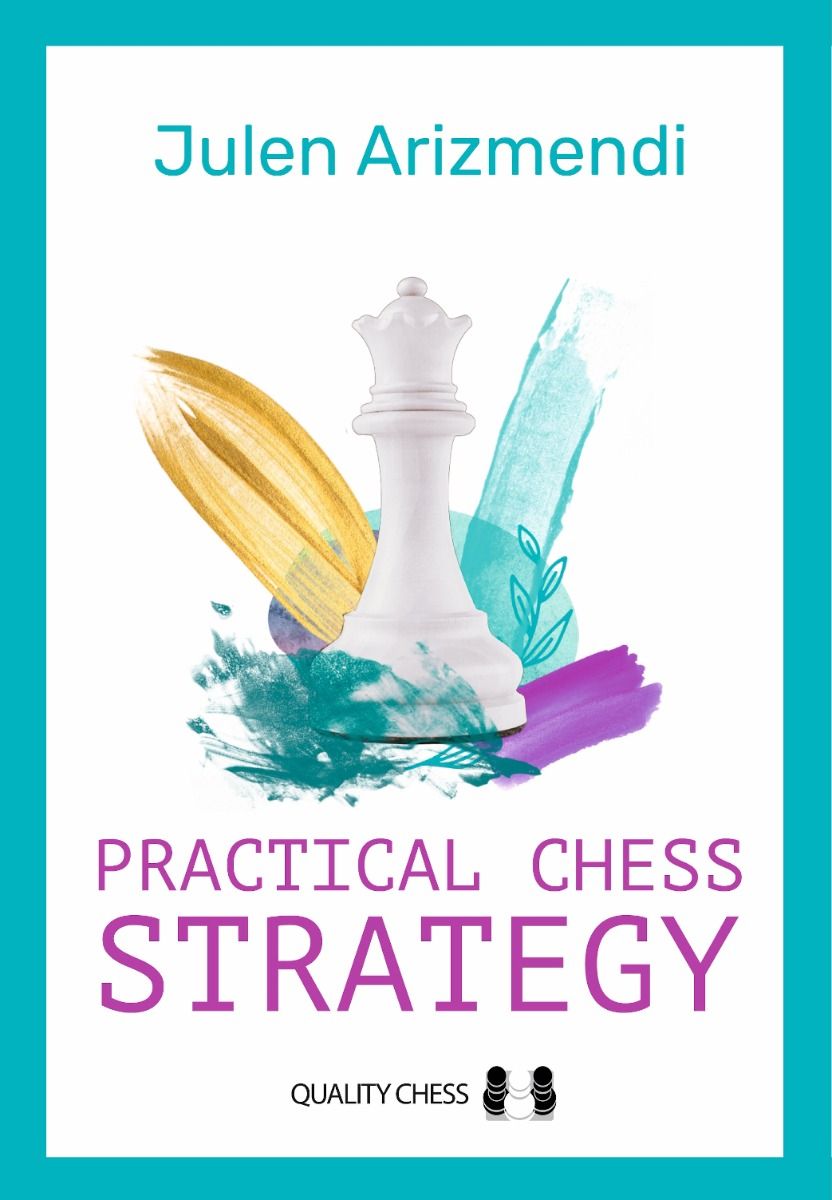
Practical Chess Strategy
350 SEK
Wouldn’t it be nice if we had a set of rules that always directed us towards the best move in any chess position? That is precisely what Grandmaster Julen Arizmendi has been searching for during his long and successful coaching career, and this is where he shares his verdict: it cannot be done, but we should still be trying!
Practical Chess Strategy will teach you to break down any position into its underlying elements and apply core concepts that will guide you towards the best move and plan. GM Arizmendi deals with cases where our intuition fails us, teaches us how to assess imbalances, refutes common misconceptions about strategy, and provides exercises to test and reinforce the reader’s newfound understanding.
In this book, I want to discuss my approach to strategic thinking in chess and how to train it. One of the first things a beginner learns – if he or she manages to not quit the game altogether after being mated on f7 a dozen times – is the value of the pieces. This information is quite useful, since by simply adding points we can keep track of how things are going. Counting material becomes our first evaluation tool. It’s an effective one, as it allows us to dramatically cut down on the number of reasonable moves: we go from considering any move to only those that do not hang material. But then things start to get more complicated.
- Betala säkert med kort
- Maila oss, vi svarar snabbt!
- 30 dagars öppet köp
Saknar du en artikelgrupp? Kontakta oss och berätta!
- Varumärke9781784832667
Beskrivning
Art.nr: 4170
Chess terminology is sometimes confusing. Take for instance “strategic” and “positional” play. T hey are often used interchangeably, but they are, in my opinion, quite different. Strategy is the process of planning and carrying out long-term operations that change the position accordingly. It involves deciding how to place your pawns and pieces, and considering which pieces you want to keep or exchange. Positional play, on the other hand, is generally short-term: the players maneuver their forces to profit from defects the opponent’s position already has, or they place their pieces as harmoniously as possible hoping that an opportunity to do something more meaningful will arise.
2025
av GM Arizmendi
424 sidor