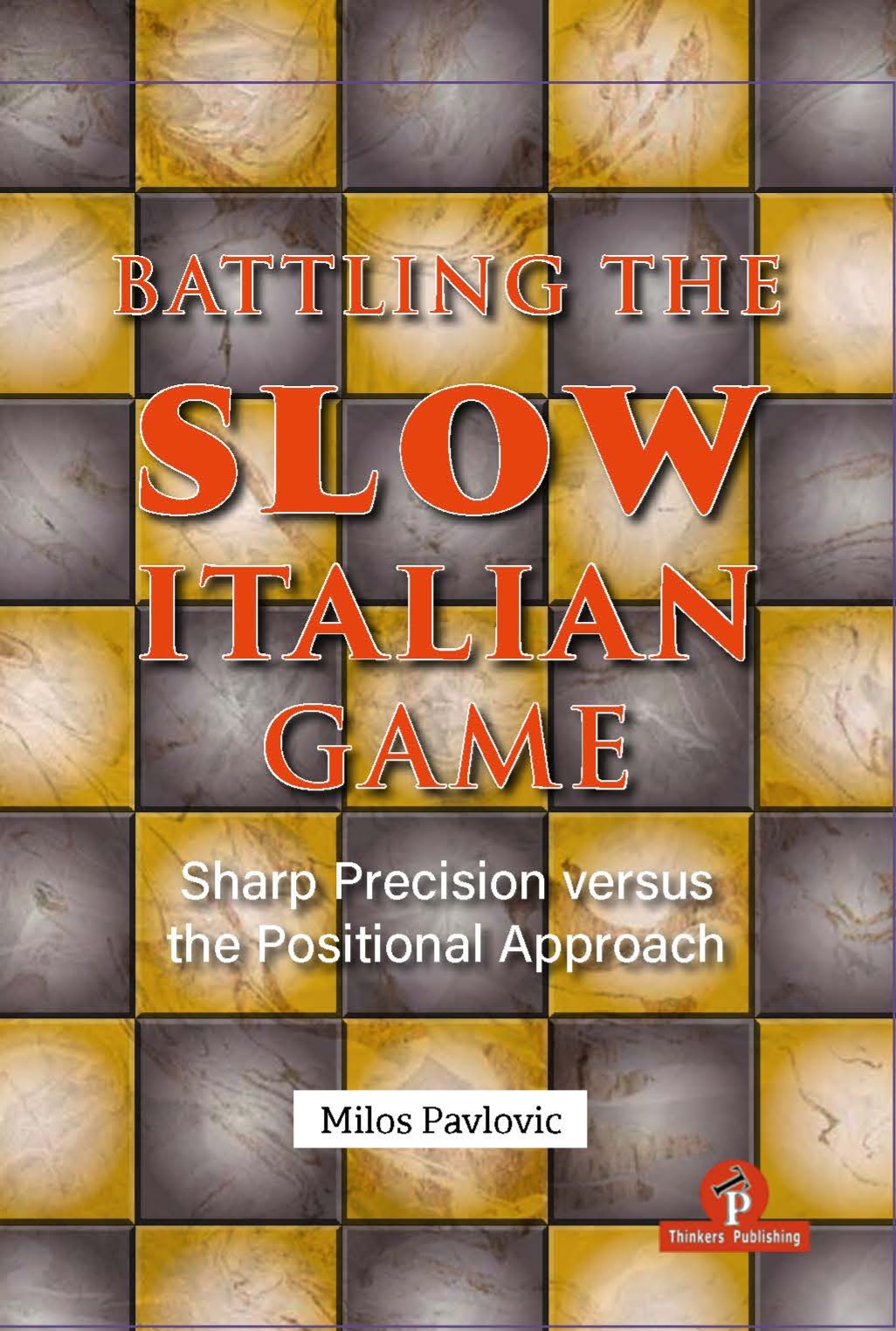
Battling the Slow Italian Game – Sharp Precision Versus the Positional Approach - Hårdpärm
375 SEK
av Milos Pavlovic
2026, 240 sidor
- Betala säkert med kort
- Maila oss, vi svarar snabbt!
- 30 dagars öppet köp
Saknar du en artikelgrupp? Kontakta oss och berätta!
Beskrivning
Art.nr: 4261
Focuses on one of modern chess’s most relevant battlegrounds: the Slow Italian Game
Shows how the Italian has evolved from a quiet classical opening into a rich strategic arena
Players face a critical strategic crossroads:
Sharp, tactical play with precise pawn breaks
Refined positional maneuvering and long-term planning
Dynamic pawn structures and timely pawn breaks
Concrete tactical ideas versus flexible positional setups
Subtle maneuvering plans and piece re-routing
Long-term structural considerations in slow Italian positions
Why different styles succeed in different positions
Sharpens your understanding of the Slow Italian
Improves decision-making in both tactical and strategic scenarios
Helps elevate practical results in modern competitive play
Filer och media
 | Bifogad fil |