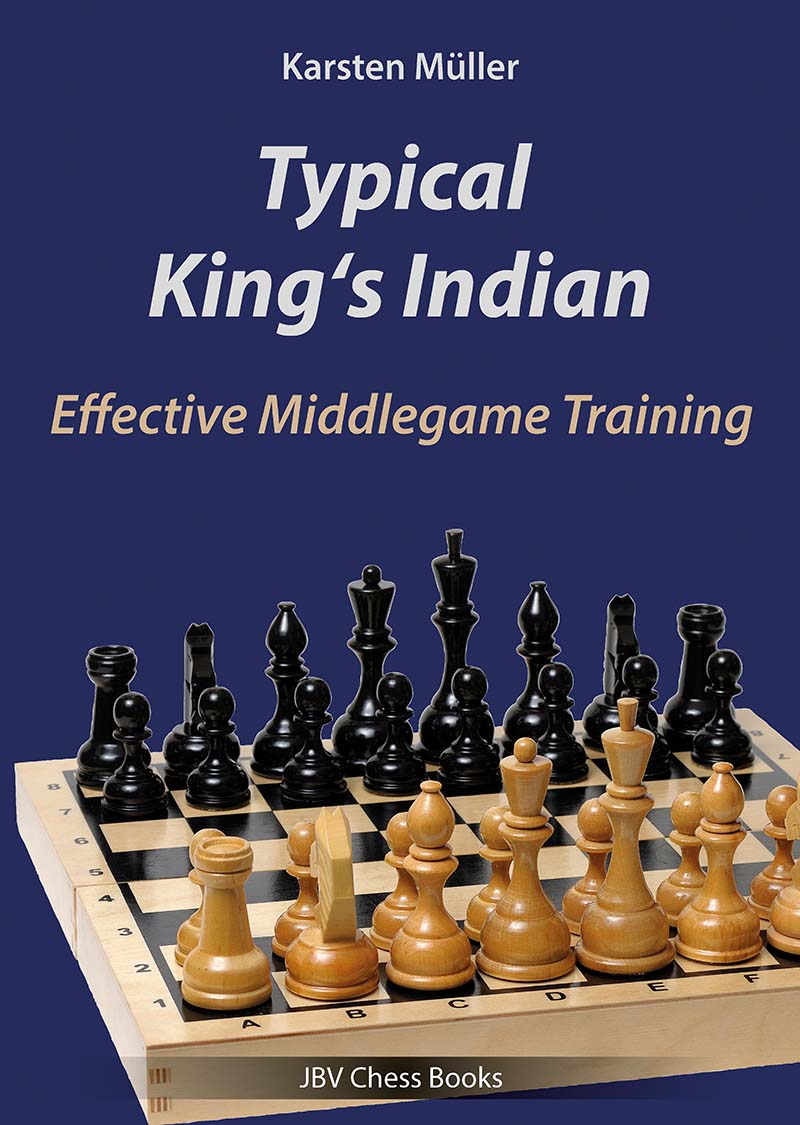
Typical Kings Indian
250 SEK
Du spelar dina drag i Kungsindiskt och sedan kommer mittspelet. Du hittar inga planer. Du går på hårda nitar. Hur vore det ifall du tränar på mittspelsställningar med tematiska problem? Det är nog ingen bortkastad tid. Kika gärna i pdfen och bilda dig din egen uppfattning.
Boken har en modern touch. Bredvid varje uppgift finns en QR-kod som man kan scanna för att se lösningen i sin mobil!
- Betala säkert med kort
- Maila oss, vi svarar snabbt!
- 30 dagars öppet köp
Saknar du en artikelgrupp? Kontakta oss och berätta!
- Varumärke9783959209649
Beskrivning
Art.nr: 9783959209649
av stormästaren Karsten Müller
166 sidor
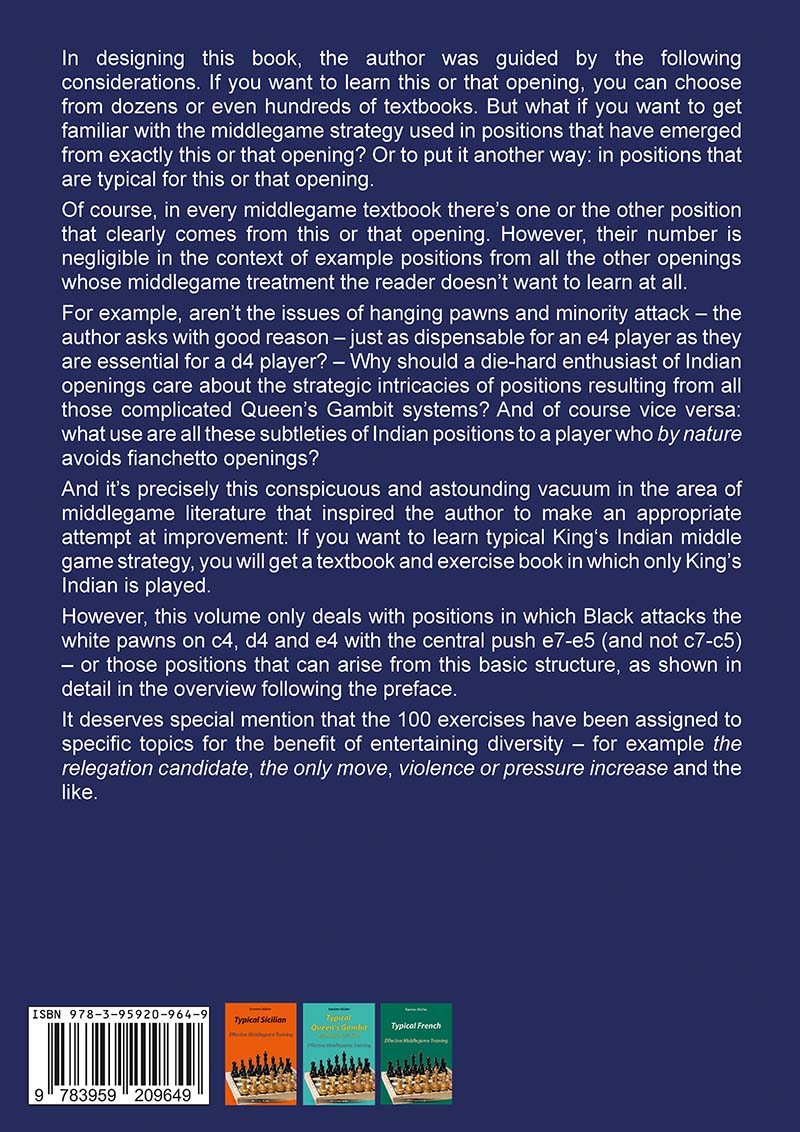
In designing this book, the author was guided by the following considerations. If you want to learn this or that opening, you can choose from dozens or even hundreds of textbooks. But what if you want to get familiar with the middlegame strategy used in positions that have emerged from exactly this or that opening? Or to put it another way: in positions that are typical for this or that opening.
Of course, in every middlegame textbook there's one or the other position that clearly comes from this or that opening. However, their number is negligible in the context of example positions from all the other openings whose middlegame treatment the reader doesn't want to learn at all.
For example, aren't the issues of hanging pawns and minority attack – the author asks with good reason – just as dispensable for an e4 player as they are essential for a d4 player? – Why should a die-hard enthusiast of Indian openings care about the strategic intricacies of positions resulting from all those complicated Queen's Gambit systems? And of course vice versa: what use are all these subtleties of Indian positions to a player who by nature avoids fianchetto openings?
And it's precisely this conspicuous and astounding vacuum in the area of middlegame literature that inspired the author to make an appropriate attempt at improvement: If you want to learn typical King's Indian middle game strategy, you will get a textbook and exercise book in which only King's Indian is played.
However, this volume only deals with positions in which Black attacks the white pawns on c4, d4 and e4 with the central push e7-e5 (and not c7-c5) – or those positions that can arise from this basic structure, as shown in detail in the overview following the preface.
It deserves special mention that the 100 exercises have been assigned to specific topics for the benefit of entertaining diversity – for example the relegation candidate, the only move, violence or pressure increase and the like.
Filer och media
 | Läs ett utdrag ur boken |