- 35%
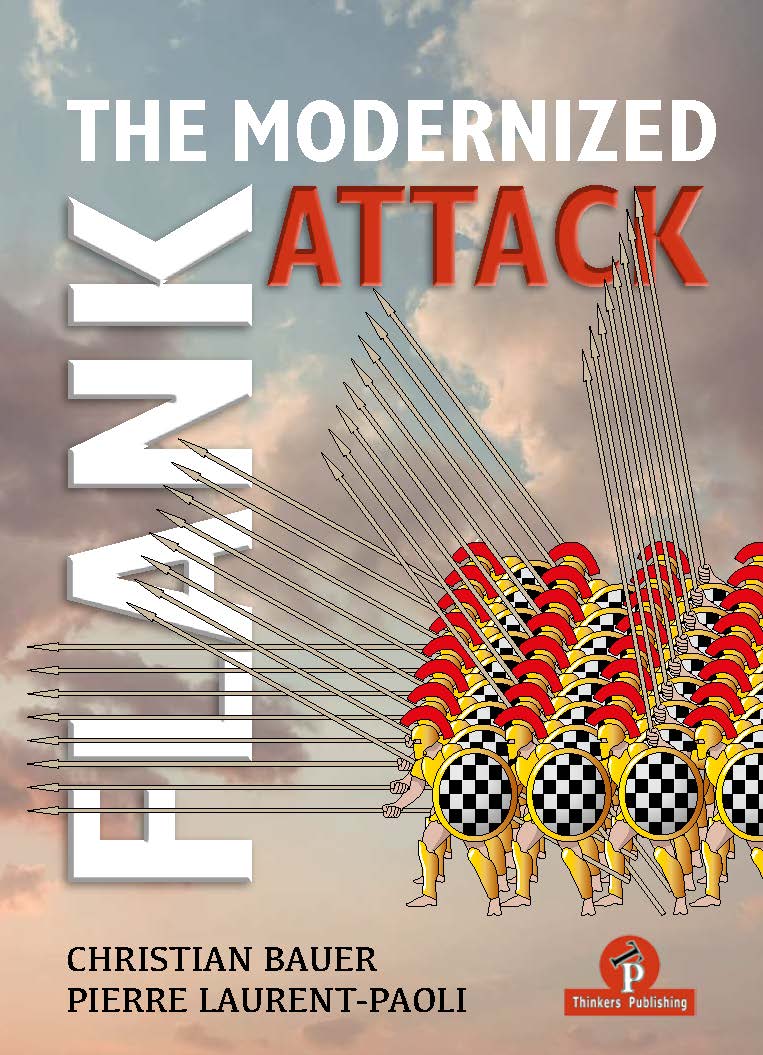
The Modernized Flank ATTACK
460 SEK300 SEK
Lägsta pris de senaste 30 dagarna460 SEKGillar du att spela g2-g4? I så fall har du hittat rätt. De franska stormästarna Christian Bauer och Pierre Laurent-Paoli undersöker samtliga öppningar (utom Sicilianskt) där draget g2-g4 är spelbart. De behåller objektiviteten genom hela boken.
- Betala säkert med kort
- Maila oss, vi svarar snabbt!
- 30 dagars öppet köp
Saknar du en artikelgrupp? Kontakta oss och berätta!
- Varumärke9789464787511
Beskrivning
Art.nr: 9789464787511
Så vem riktar sig boken till? Så klart till dig som gillar draget g2-g4 vilket t.ex Shirov har spelat som vit i såväl 1.d4- som 1-e4-öppningar. Men, här kommer det intressanta. Om man vill lära sig allt om schack och få med sig en förståelse för draget g2-g4 både som vit och svart får man här en mycket bred genomgång av draget i öppningsfasen. Man kommer att veta mer exakt när draget faktiskt är bra. I vissa ställningar där man tidigare inte övervägt draget kommer det naturligt till oss. Likaså som svart. Tänk dig själv att bli överraskad av draget g2-g4 och upptäcka att det kokta fläsket är stekt? Ja, det är inte så roligt. Sååå, för dig med en sund aptit på kunskaper i vårt ädla spel vilka kommer hjälpa dig att bli en bättre eller mer informerad spelare har du ett fint äventyr framför dig. Ett fynd!
Utgiven 2024
360 sidor
You can hardly find a more unconventional idea than pushing your g-pawn 2 squares down the board. Some may say it belongs to a backroom chess game in a café, some may say it belongs to olden times – back when the King’s Gambit was the main line after 1. e4 e5. But we are seeing more and more occurrences at the top-level.
Is it a coincidence ??
It’s safe to say that g2-g4 (or ...g7-g5) is one of the most weakening moves available. As a matter of fact, the objectively worst first-move happens to be 1.g4, accompanied by an evaluation of -1.30 when running Stockfish 15 on low-depth (we did not see the point on letting it run in this position, it will probably get lower, that’s not good advertising).
Now, there are quite a few positions where g2-g4 (or ...g7-g5) makes more sense and brings an interesting fight. The player has to be willing to take some considerable amount of risk, and that may be too much for some of us. The resulting positions often get messy and veer very much away from traditional paths, which means the expected number of mistakes gets higher, thus decreasing the drawing percentage.
Still, it’s important to remain somewhat objective and not to get too excited by the thrill of an upcoming attack. Yes, g-pawn pushes are aggressive, but can also very quickly turn out to have disastrous consequences. “I wish I could play g4-g2”, is usually a sign the experiment has gone wrong. The book is aimed at covering a wide range of chess openings. We decided to showcase the different categories of g4 (...g5) one may meet in the early stage of the opening, no matter if the idea is strong, interesting or quite unadvisable (bad, you may also say).
Most of the time, g4 (...g5) won’t be the best move, but we will try to show that the value of surprise and the tendency of players to react solidly to aggression can matter as well. Also, we have decided not to include any Sicilians, as the g2-g4 push has become so frequent there, and in many variations deeply analyzed already.
Over the 50 games that we picked, the 3 main reasons why the g-pawn is being launched are : 1) Attacking a short-castled king with a hook created by h2-h3 (or ...h7-h6) 2) Challenging the stable position of a Nf3 (or ... Nf6). It becomes stronger when the knight doesn’t have a good square to hop to. 3) Seizing space on the kingside. The more you dive into the examples, the more you’ll see that it’s a mix of the 3, with one reason prevailing. We wish you happy reading and hope that you’ll implement some of these lines into your play!
Pierre Laurent-Paoli & Christian Bauer
Filer och media
 | Bifogad fil |