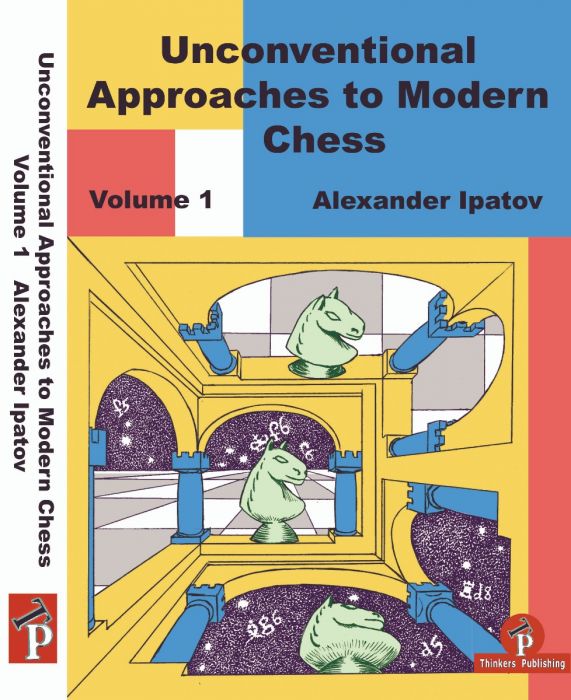
Unconventional Approaches to Modern Chess, Volume 1: Rare Ideas for Black
320 SEK
av Alexander Ipatov
2019, 360 sidor
- Betala säkert med kort
- Maila oss, vi svarar snabbt!
- 30 dagars öppet köp
Saknar du en artikelgrupp? Kontakta oss och berätta!
Beskrivning
Art.nr: 9789492510488
This book is about the practical approach to the game of chess. It shaped me as a player and now I would like to share my philosophy with you. My objective is to combat several generally accepted misconceptions such as
only studying opening theory will make you a better player
one should always follow the first or second line shown by Komodo or Stockfish
that “in theory” is equivalent to “over the board”.
The last fallacy is especially dangerous because it implies that players will keep on making the best moves over the board, and therefore sidelines should never be played as the opponent will always find a way to retain and convert the advantage. That is in theory. In practice, however, many players will feel like fish out of water once they end up in a position that is objectively better for them, but one that they have never analyzed. Overall, based on my experience as a chess professional, I strongly believe that the above-mentioned fallacies do not hold true empirically,
The book is divided into four parts.
Part I covers sidelines in the mainstream openings where I take a major opening and analyze one or several sidelines. This is the most theoretical part of the book, where I share a significant amount of original thoughts and analyses that constitute my opening repertoire.
Part II discusses the concept that I refer to as systems. It still involves theory, but less so in comparison to Part I. What I am trying to convey in this part is the “schematic thinking” – where you think in terms of plans and typical ideas.
Part III takes one step further in abstraction – it analyzes notable modern games where one player showed ambition early on in the game and it worked out well for him.
Part IV covers the so-called “early surprises” where early on in the game a player implemented a move that shocked his opponent.
Filer och media
 | läs ett utdrag |